

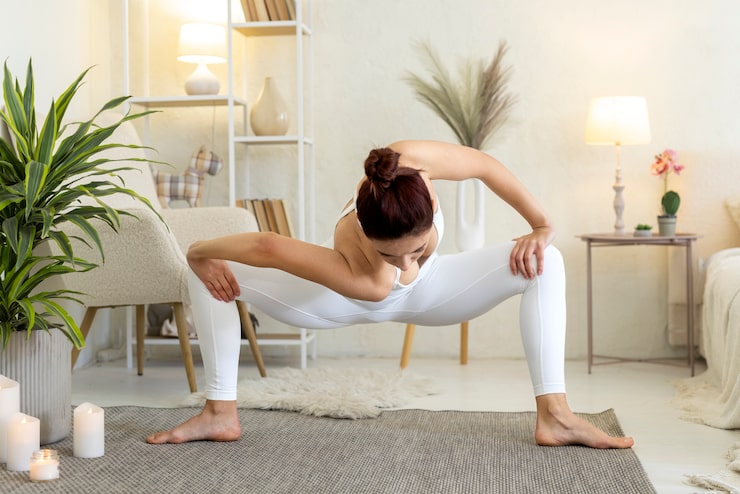
Have you ever felt so stressed or exhausted that you just needed to step away and rest? Life’s demands—work, family, daily busyness—can wear you down. Restorative yoga offers a gentle way to recover, calm the mind, and restore your energy.
What restorative yoga is
Restorative yoga is a slow, supportive practice that focuses on deep relaxation and recovery. It isn’t about effort or breaking a sweat. Instead, you use props—bolsters, blankets, blocks—to fully support the body in long-held poses. By staying in each position for several minutes, you give your body time to release tension and enter a healing, restful state.
Origins
The style grew out of the teachings of B.K.S. Iyengar, who helped make yoga accessible through the use of props and careful alignment. His approach lets people with different bodies and abilities stay in poses longer and benefit from deep relaxation.
Benefits
– Physical: Long, supported holds help relax tight muscles, improve flexibility, ease chronic pain, and promote better alignment. Gentle stretching and support reduce strain on joints and can improve circulation.
– Mental: The slow pace and focus on breath quiet the mind, lower anxiety, and encourage present-moment awareness. This can sharpen mental clarity and make daily stress easier to manage.
– Emotional: The practice creates a safe space to notice and release emotional tension. It can support emotional healing, build resilience, and foster self-compassion.
– Other: Regular practice may improve sleep, support immune function, and boost overall well-being.
How it works
Poses are typically held from about 5 to 20 minutes, giving your body time to settle and let go. Props are essential—use them so you can relax without strain and stay comfortably in each pose.
Helpful restorative poses (descriptions)
– Kneeling, sit back on your heels and stretch your arms forward with your forehead resting on the mat. Place a bolster under your chest for support. This soothes the hips, thighs, ankles, and eases tension in the back and shoulders.
– Lie on your back with knees bent, feet on the floor, and a block or bolster under your sacrum. This supports the lower back, opens the chest and shoulders, and gently lengthens the spine.
– Sit sideways against a wall, then lower back to the floor and swing your legs up the wall. Rest arms at your sides, palms up. This position reduces leg fatigue and swelling, calms the nervous system, and helps circulation.
– Lie on your back, bring the soles of your feet together and let your knees drop open. Support knees with bolsters or blankets. This opens the hips and groin and can ease digestive or menstrual discomfort.
– Lie on your back with legs extended, arms at your sides, palms up. Place a bolster under your knees and a folded blanket under your head. This full-rest pose allows the whole body to release and is an ideal way to close a session.
Practice tips
– Warm up: Start with gentle movements—neck rolls, shoulder shrugs, light twists—to ease into relaxation.
– Pose duration: Hold each restorative pose several minutes so your body can soften and release. Use props to make the position comfortable.
– Cool down: Finish with a full-rest pose to absorb the benefits of the practice. Focus on slow, steady breathing throughout.
– Space: Create a calm practice area at home—soft lighting, a quiet corner, and a few props can make a big difference.
– Start small: Begin with 20–30 minute sessions and gradually increase to 45–60 minutes as you feel ready. Short, consistent sessions often work better than occasional long ones.
– Consistency and accessibility: Practice regularly, even briefly, to build lasting benefits. Restorative yoga is adaptable for all ages and fitness levels; props help tailor each pose to your needs.
Getting started
Try a local class or an online guided session to learn the basics. Set up a small, comfortable space at home and keep a few props on hand. With steady practice, restorative yoga can become a reliable tool for reducing stress, improving sleep, and bringing more balance to daily life.
Give it a try and see how gentle, supported practice can help you relax, recover, and feel more peaceful.


