

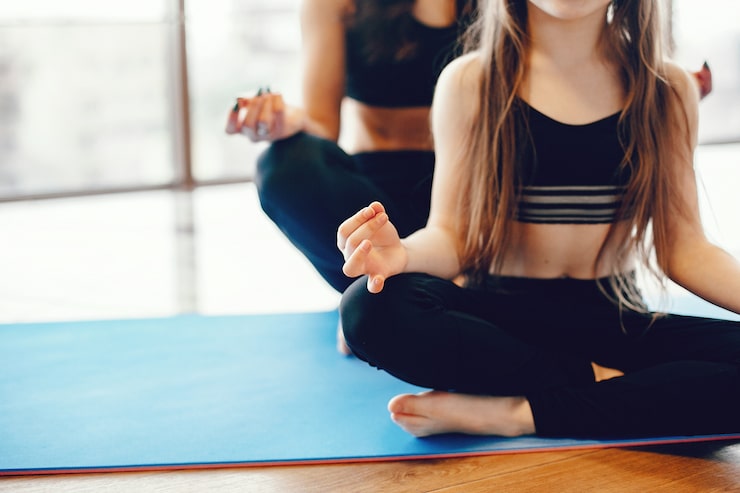
Yoga is an accessible, powerful practice: no gym, no equipment, no experience needed. It’s more than stretching and breathing — it can support weight loss and offers benefits that many other workouts don’t. Even with limited time, a few basic poses can help you start toward better health.
Vajrasana (Thunderbolt Pose)
Sit with your knees and feet together and your sit bones resting on your heels. This posture helps align the spine, deepen breathing, and calm the mind. It also gently stretches the ankles and knees and promotes circulation around those joints. Practice up to five minutes, coming out if your knees, ankles, or feet feel stressed. You can sit on a block or folded blanket for extra support.
Downward-Facing Dog
The body forms an inverted “V,” with the tailbone lifted and weight shared between hands and feet. The heart is higher than the head, offering a mild inversion, and the chest opens to make breathing easier. It’s a full-body stretch that can feel challenging at first but becomes more restful with practice.
Pigeon Pose
A deep hip stretch that can be practiced gently. Bring one knee forward so the foot rests near the opposite hip while the other leg extends behind you. Let the bent leg settle naturally and fold your torso over it. Breathe into the stretch and, if comfortable, use your hand to deepen it gradually. Flexible hips can reduce lower back pain, improve posture and balance, and lower the risk of injury.
Cat–Cow Sequence
A simple flow that strengthens the core while stretching the spine, abdomen, and shoulders. Start on hands and knees with wrists under shoulders and knees hip-width apart. Inhale into Cow by dropping the belly and lifting the chest and head. Exhale into Cat by rounding the spine and drawing the navel toward the spine. Move slowly with your breath, keeping your muscles engaged.
Shoulder Stand (legs-over-head posture)
This inversion shifts weight onto the shoulders and upper back, helping release tension held in the upper spine. Keep the chin slightly lifted and the shoulder blades close together to protect the neck. This pose can relieve stress and anxiety and encourages breathing into the back body and belly rather than only the chest.
Plank Pose
A straightforward but effective core-builder often used in flow sequences. Place your shoulders over your wrists with arms shoulder-width apart and fingers spread. Keep the legs and back straight, engage the legs, and avoid letting the lower back sag. Holding plank for longer periods increases the core challenge.
Savasana (Corpse Pose)
The classic final resting pose is simple but easy to skip. Lie quietly for a few breaths, letting the body settle and the breath slow. Practicing stillness reconnects you to the present and supports mental rest and recovery.
Showing up consistently is the hardest part — begin with these basics, give each session your best, and you’ll start to feel the benefits.


