
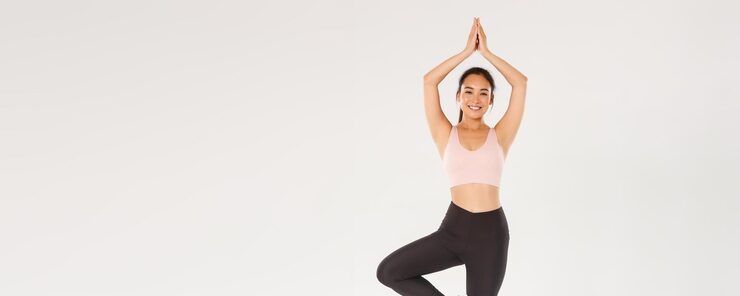
The best way to get the most from yoga is to pick a practice that fits your current ability and flexibility. When you find the right fit, you’ll come to enjoy this gentle but powerful form of exercise and its many health benefits.
Yoga isn’t about pushing yourself until you’re exhausted or in pain. It’s about improving flexibility and balance while reducing stress and building functional strength. Start slowly and listen to your body—muscles need time to adapt to new stretches and movements. Beginner-friendly poses gently loosen tight areas and, despite their simplicity, can significantly improve fitness and mobility.
Mountain pose
Mountain pose is a foundational standing posture often used as a warm-up or as part of a Sun Salutation. Stand tall with a straight spine and your big toes touching; if that’s uncomfortable, keep your feet slightly apart. Let your arms rest by your sides with palms facing outward. Hold for 30 seconds to a minute. This pose improves posture, balance, and the strength of your lower body.
Forward fold
Building on mountain pose, forward fold helps relax and stretch the legs. From mountain pose with hands on your hips, hinge forward from your hips as you exhale. Place your hands where comfortable—by your feet, folded, or holding your ankles if you can. If needed, keep a soft bend in the knees. Hold 30 seconds to a minute. Avoid this pose if you have back problems. It’s calming and helps loosen tight leg muscles while strengthening the lower body.
Downward-facing dog
Downward dog is one of the best-known yoga poses and a common part of Sun Salutations. Start on all fours with knees under hips and hands shoulder-width with fingers spread. Inhale, lift your knees off the mat and raise your hips upward; then slowly straighten the legs while keeping them soft. Keep your head between your arms and shoulders broad. Hold for one to three minutes. Beginners may stay on the balls of their feet or keep the knees bent until flexibility improves. This pose engages many muscle groups, building strength, balance, and flexibility.
Plank
Plank is excellent for core strength and is kinder to the back than crunches. From downward dog, lower your hips until your torso is flat and your arms are directly over your hands. Keep your head neutral, looking down at the mat. Aim for 30 seconds to a minute or longer as you build endurance. Plank tones the abdomen and strengthens the arms and spine.
Low lunge
Low lunge stretches the groin and thigh—areas that often tighten from running or hiking. From downward dog, exhale and step your right foot between your hands so your right knee stays over the heel. Slide your left knee back and lower it to the mat to feel a stretch along the front of the left leg. Hold for up to a minute, then repeat on the other side. Many yoga sequences flow from one pose to the next, using breath to guide movement and create a smooth rhythm.
These five poses form a solid foundation for more advanced practice. Modifications let beginners work within their limits and still get the full benefits. Mastering these basics sets you up for a rewarding, sustainable yoga routine—start by showing up and giving it your best; you deserve it.